It may surprise you to know that there are different types of cardboard boxes. When talking about this, there are really two classifications, paperboard and corrugated boxes. These boxes are a form of storage that is used when shipping and receiving. These boxes can come in various shapes and sizes depending on the shipping or storage requirements. The term corrugated boxes cover the broad term when it comes to shipping and receiving. There are different kinds are corrugated boxes and paperboard boxes, but there is even more to it than that which we will get into later. Corrugated boxes are what we are going to look at and the different kinds that there are mainly.
Corrugated boxes are the most common type of boxes; they are the ones we see almost every day. These boxes are made from a process that is essentially stacking. Layers of paper are laid onto one another with a wavy layer in between the stacked paper. This wave gives the corrugated boxes their strength. Typically it’s two pieces of paper layered together on the top and bottom, and the wave separates them, more paper can be added to the walls or wave to add more strength but the more stacks means that more materials are needed; thus, the more money required. There is an anti-static corrugated board that is good for shipping electronics as no static build up can be created. Generally, this material is used for mailing boxes, moving boxes, and even pizza boxes.
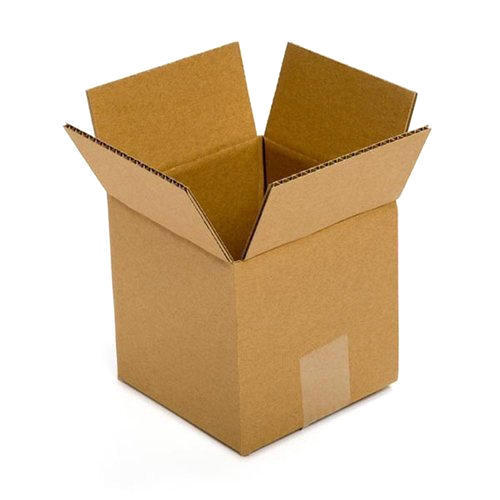
Another kind of corrugated box is wax impregnated boxes. These boxes are unique. Before the material is folded to form a box, it has wax infused or coated on it. This kind of box is used for shipping cold items like ice. Additionally, these boxes are used to preserve food items that are being stored in refrigerators. The was is applied because it forms a barrier between the corrugated box and the water or moister that may build up on the outside of the box or ice melting inside or outside.
The final kind of corrugated box we are going to talk about is cardstock. This material is thin like paperboard but not as thin as paper. This material can bend and flex easily, much like paper. This material is not used for shipping as much per se. It is generally used for book covers, business cards, postcards, and catalog covers. The manufacturing process of cardstock is much like paperboard. This also means that it is relatively cheap when it is compared to corrugated cardboard. This material is not often used for boxes due to how thin it is and how much flexibility or bend it has. Odds are if this were a box and left in the rain; it would gradually fall apart with each drop of rain that hits it.
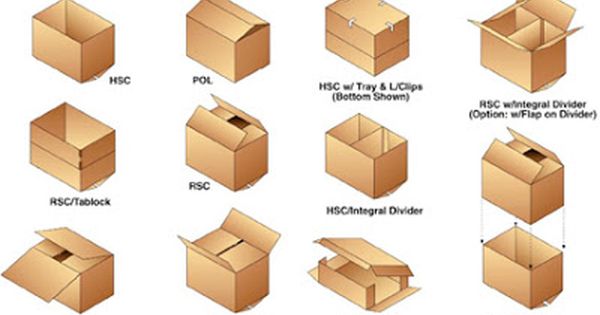
There are so many different types of cardboard boxes; it is kind of astonishing, really. I personally did not know there were so many. The materials discussed are just a few examples of the different types there can be, and I found them fascinating. I did not know there was such a thing as was covered, corrugated board, but it makes sense when it comes to the food industry. The need for many different kinds of corrugation makes sense as not all companies need a standard corrugated box.
 Shipping Supplies Home